
Living with History: Inside a Joyful 16th-Century Manor in Somerset
Updated: May 19
Set in the Somerset countryside, interior designer Sarah Southwell’s 16th-century manor house is a family home shaped by history, craft, and a joyful approach to colour. Home to Southwell, her husband Nick, and their three sons, the listed property balances careful conservation with an expressive, highly personal interior language.
BRAND
Sarah Southwell Design + Interiors
TYPE
Family Residence
LOCATION
Somerset, England
SERVICES
Full feature on YouTube, IG, FB & TikTok
PRESENTED BY
Sarah Southwell


“I like things that are original and authentic,” Southwell says. “This house is full of things like that.” From lime-washed walls to antiques sourced at markets and fairs, each element feels chosen to sit naturally within the building’s long story rather than overwrite it.

The entrance hall immediately reveals what drew the family from Streatham to the countryside: heavy original doors, uneven floors, and the unmistakable character of a house that has evolved over centuries. From here, the snug has become the heart of daily life. Anchored by a large inglenook fireplace and wood burner, it is designed for warmth and comfort, with upholstered bench seating and furniture designed by Southwell herself.


Traditional materials were essential. Lime plaster and limewash allow the walls to breathe, while original timber was painted and waxed rather than sandblasted, preserving its integrity while lightening the space.
Stripes appear early and often. “They bring a bit of fun and joy to every design that I do,” she explains. “I love design that makes you happy.”

The kitchen is a clear example of how the house has been adapted for modern living. Once covered in brown carpet tiles, it has been completely reworked into a space that feels both practical and rooted in tradition. Natural marble sits against lime-washed walls, while aged brass details and a generous AGA form the functional centre of the home.


The AGA required discreet structural work, but it feels wholly at ease within the room. Open shelving displays a collection of antiques gathered from travels and trade fairs, reinforcing a kitchen that has grown over time. Newly added banquette seating, soon to be painted red, introduces another layer of colour. “I like everything classic with a bit of a twist,” Southwell says. “You’ll see that throughout the house.”


Beyond the kitchen, a sloping utility room is designed to withstand muddy boots and busy routines. Rustic herringbone tiles follow the angle of the floor, while cheerful colour choices lift an otherwise practical space. Southwell’s own office is tucked under the stairs, a reclaimed nook filled with samples and sketches. “This is where all the magic happens,” she says, acknowledging the constant balance of work and family life.

Nearby, a bathroom lined with handmade tiles leads to a hidden room once used as a cupboard. Connected by a discreet jib door, it has become one of the most talked-about spaces in the house, playful, unexpected, and entirely in keeping with Southwell’s love of surprise.

The conservatory was originally the one area Southwell struggled to love. An add-on that exposed the original exterior wall, it felt visually disconnected from the rest of the house. Painting the inner wall black transformed the space, allowing planting, colour, and light to take centre stage. Handmade lampshades created with her youngest son and a table inherited from Nick’s mother make it a room rooted in family life.
“With all the plants, it’s quite grounding and makes you feel good,” she says. “Now I adore this space.”


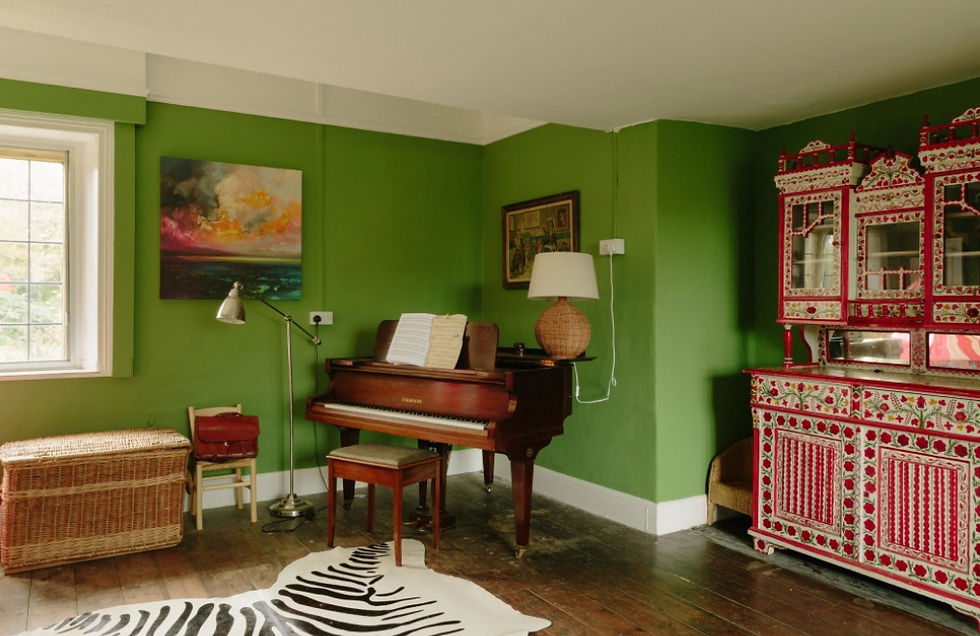
More formal rooms are used sparingly. The drawing room is reserved for quiet moments or Christmas gatherings, filled with antiques collected on travels and a sofa rescued and reupholstered locally. Elsewhere, the playroom is deliberately relaxed. Hand-painted folk art furniture, bold green walls, and striped details create a space where mess is allowed and creativity encouraged.

Upstairs, bedrooms continue the narrative. The eldest son’s room features a circus-tent ceiling painted in stripes and aeroplanes, a scheme the family is in no hurry to change. Fireplaces uncovered and restored, antique beds, and bold colour combinations give each room a strong sense of identity without losing coherence.

Bathrooms are equally characterful, with patterned wallpapers, deep greens, and playful detailing. In the principal bedroom, sanded original floorboards and decorative wallpaper lining the wardrobes bring warmth and texture. The adjoining bathroom places a bath by the window, creating what Southwell describes as a boutique-hotel moment within the home.


Guest rooms follow the same generous approach, with framed textiles, hand-painted furniture, and thoughtful layouts designed to make visitors feel instantly at ease.

For Southwell, the success of the house lies in its honesty. Nothing feels overly staged or precious. “I don’t like to do things that are like everybody else,” she says. “I like things that are original and authentic.”
After years of careful design and sourcing, the manor now feels settled and alive, its 16th-century structure supporting a family home filled with colour, craft, and daily ritual. It is a place where history is respected, not frozen, and where character is allowed to grow naturally over time.


